

A Steve Graham magnum opus, in which attempts are made to replicate a $13K digital front-end for $3K.
Part 1
If
-You have an aversion to used gear, stop reading now.
-You only want the latest and greatest, stop reading now.
-You don’t fancy searching through buy and sell listings, you get the picture.
If, on the other hand, you lust after high-end digital but despair due to budgetary constraints, read on.
Not-new, or discounted end-of-line components, comprise most of the gear in my main listening system. Line stage, amps, speakers and power conditioner were all previously enjoyed or not loved sufficiently to command their original asking prices. The exceptions are my NAD Masters 50.2 digital source, Cardas digital interconnect and PS Audio Directstream DAC. Those last three are where the $13K number at the top of the page comes from. My REL Classic 98 subs were purchased new.
Seeking Discount Digital (Cue, “Mission: Impossible” theme)
I started at the DAC and worked backwards.
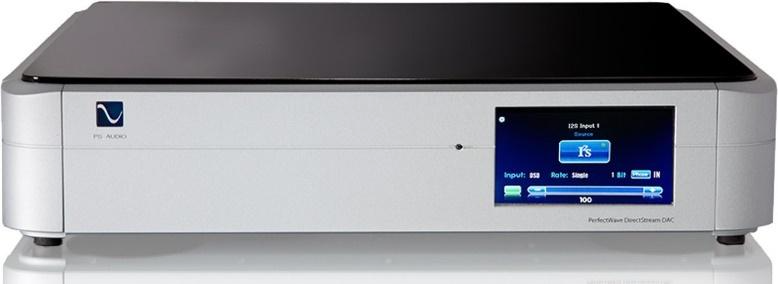
PS Audio Directstream DAC, MK 1 version
With the introduction of the Directstream MK 2, the MK 1 version has become very reasonably priced. I’ve seen them on Canadian buy and sell sites priced from $1,600 to $2,200. The MK 1 isn’t the latest and greatest, but it still performs very well, especially considering asking prices are around one-quarter of what they sold for new. Oddly, I see them sell for around $2,000 USD on the US used equipment sites.
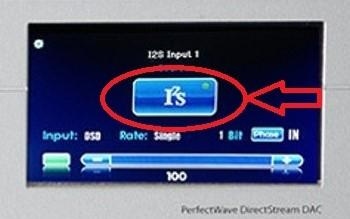
A potential key to unlocking better performance, especially from inexpensive sources, is the Directstream’s I2S input, see picture above. PS Audio has long-touted the superiority of sending digital data to DACs via the I2S connection. I2S (I squared S, to use its proper name) has separate data lines for the two clock signals and one music data signal. Normally, all three are combined and transmitted together in conventional digital data interfaces. Conventional meaning: Toslink, coax, AES/EBU or USB. Separating the combined data into I2S’s three separate streams before they get to the DAC can potentially lead to improved accuracy of D to A conversion. There is no I2S transmission standard, but most manufacturers that offer I2S connectivity, tend to adhere to the PS Audio “standard” or minor variations of it, carried on a HDMI cable. Several Asian-based manufacturers aspiring to higher audio performance, have jumped on the I2S bandwagon.
Converting conventional digital data streams to I2S, necessitates the use of digital-to-digital converters, DDCs for short. Put simply, DDCs (also called D2Ds) nominally clean up the zeros and ones and change them into a format that is more palatable to D to A converters. In the case of I2S, besides the “cleaning”, clock and data streams are unscrambled for separate transmission.
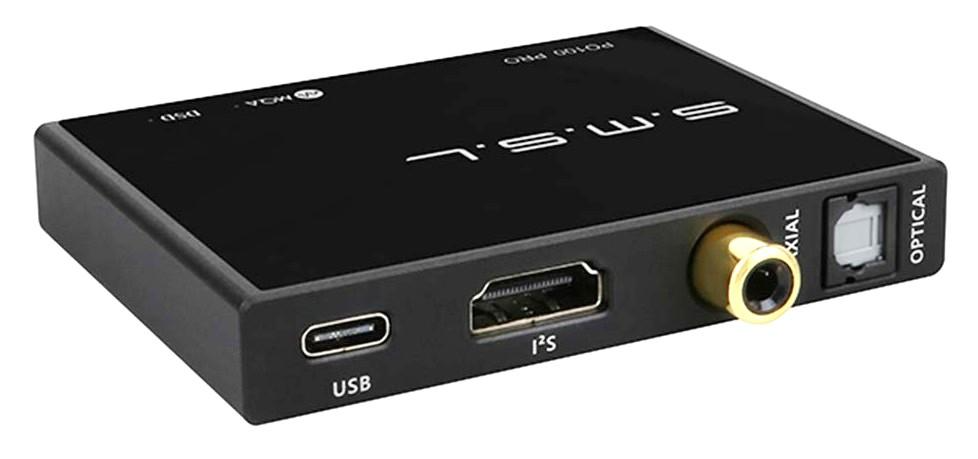
S.M.S.L PO100 Pro USB Digital Interface DDC
That’s a bit of a mouthful for a device that fits in the palm of a hand and sells for about $100 CDN delivered, ~$70 US, from eBay. The PO100 Pro will take a USB data stream and output Toslink, coax or, drum roll please, I2S! Worth a shot? I thought so. The PO100 Pro is not to be confused with the standard PO100 which does not offer I2S output.
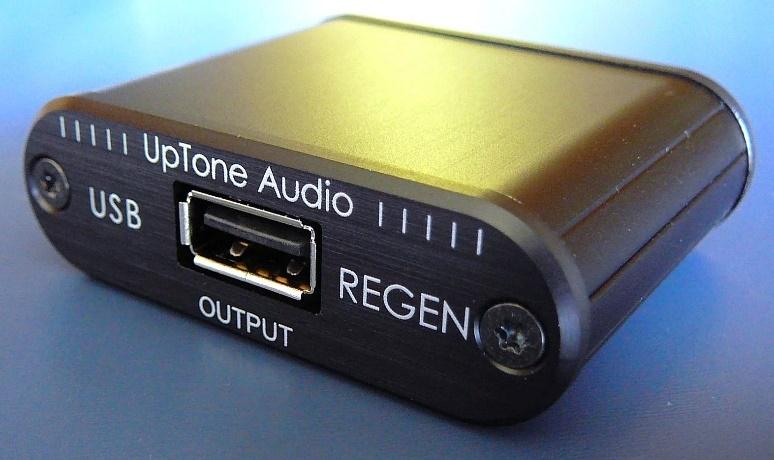
UpTone Audio USB REGEN
This device is not currently in production. Seen from time to time on buy and sell sites, it might be worth tracking down. The Regen does two important things. One, it takes electrically “dirty” USB streams and cleans them up before passing data on to the next device. Two, the Regen has its own very low noise external power supply, which also powers the next device in the stream. In this instance, the PO100. Expect to pay 150 to 200 dollars for a used Regen.
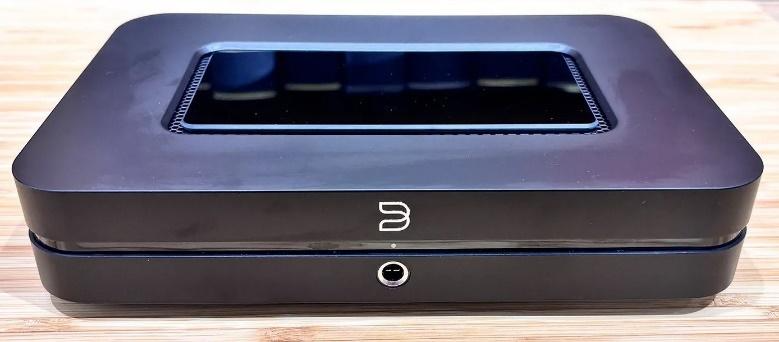
Bluesound Node
Nodes, that are now one or two generations old, can be found for 200 to 300 dollars. If you want to splash out a bit on something newer, consider the Node Nano. I reviewed the Nano in November 2024. https://wallofsound.ca/audioreviews/digital/review-bluesound-node-nano-streaming-dac/ A new Nano will set you back $400 CDN, $300 US.
Cables
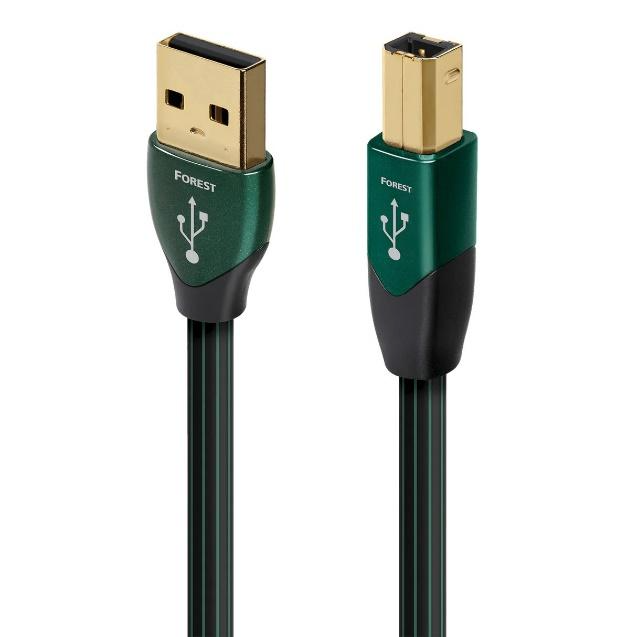
I didn’t go wild with cables. Audioquest Forest, one or two steps up from AQ’s least-expensive, were used to connect the bits and pieces together. None of the AQ cables cost more than $100 each. Dealer margin is usually quite high on cables. The purchase of two or more, should put you in a position to negotiate a considerable discount.
Listening Methodology
1/ I used my standard digital source of NAD Masters 50.2, Cardas Clear AES/EBU interconnect and Directstream MK 1 DAC, here after called, “The Reference”, to establish baseline performance, See my Cardas review from March 2025 for full system details. https://wallofsound.ca/audioreviews/digital/review-cardas-clear-aes-ebu-digital-data-cable/
2/ I arbitrarily assigned a score of 100 to, “The Reference”. I graded the various permutations of the discount system as a portion of 100. (I’m not saying “The Reference” is the ultimate in digital playback, but it is my reference.)
3/ After establishing a baseline performance with, “The Reference”, I started with the full discount system: Node N130, USB Regen, PO100 Pro and Directstream DAC, all connected with AQ cables. In my experience, it’s easier to hear a downgrade than an upgrade. Of course, I could have been wrong assuming this melange of bits and pieces would yield the best sound. You will just have to read on to find out.
4/ Principally, four tracks were used to judge sonic quality. Two of them, the Chabrier España and Dire Straits On Every Street, were used recently on my Cardas review. As well I “spun” Om Sweet Om from Taj Mo and Spanish Guitars and Night Plazas from Loreena McKennitt’s, Lost Souls.




I refreshed my memory of these four tracks, listening to them on, “The Reference”, link above. Audio output is independent of digital input, switching between inputs does not require any volume adjustment. The Node played the music files stored in the NAD 50.2 via ethernet connection. An iFi, LAN iSilencer passive filter was alternated between whatever source was connected to the DAC. I’m not sure the iFi silencer did much good, but it didn’t appear to do any harm.
“The Reference” has a way of drawing me into a musical performance in a way I hadn’t experienced previously on my system. See the Cardas review for a better description.
If there is one criticism that could be leveled against my methodology, it’s that all the down-stream components from the line stage through to the speakers, including subwoofers, might be considered overkill for a $3K digital source. My justification is, the higher resolution of “The Reference”, makes differences easier to discern.
System 1: Node N130 Source, PS Audio DAC
1a/ USB Regen, SMSL PO100 Interface, Audioquest cables
Node N130 + AQ USB cable + USB Regen + AQ USB cable + PO100 Interface + AQ HDMI cable into the Directstream DAC’s I2S input.
Sonics: In comparison to, “The Reference” there is noticeable degradation. At the bass end of the spectrum, this concoction of bits and pieces lacks a bit of extension, clarity, slam and is a somewhat dynamically constrained. By this, I mean loud and/or complex passages were slightly strained and the soundstage exhibited some increased opacity compared to, “The Reference”. Through the mids and highs resolution is slightly lower, noticeable but not huge. Soundstage width, depth and layering was reduced, more obvious with the Chabrier piece than the other tracks. Overall, the quality of reproduction was not exceptional, but not unlistenable. No, it doesn’t reach the sonic heights of, “The Reference” but nothing stands out as overtly objectionable.
Score: 70
1b/ USB Regen, SMSL PO100 Interface, no-name cables
Node N130 + no-name USB cable + USB Regen + no-name USB cable + PO100 Interface + no-name HDMI cable into Directstream DAC’s I2S input.
Though not fully convinced of the importance of expensive analogue interconnects, I am a believer in the efficacy of the digital variety. See my Cardas review and FiiO K11 DAC review. https://wallofsound.ca/audioreviews/digital/review-fiio-k11-r2r-dac-headphone-amp/
I replaced the two USB and one HDMI cables in the full discount system with cheap and/or give-away cables often included free with components.
Sonics: This surprised me. There was very little difference between the no-names and the AQ cables in system 1a. The bass was slightly less distinct, the position of voices and instruments in the soundstage very slightly less specific.
Score: 65
1c/ PO100 Interface, no-name cables, (no USB Regen)
Node N130 + no-name USB cable + PO100 Interface + no-name HDMI cable into Directstream DAC’s I2S input.
Sonics: Compared to 1b, the soundstage virtually collapsed. Voices and instruments were smeared over the space between the speakers with little specific positioning. It’s not an exaggeration to say that this configuration was essentially un-listenable.
Score: 40
1d/ PO100 Interface, one Audioquest cable, one no-name cable, (no USB Regen)
Node N130 + AQ USB cable + PO100 Interface + no-name HDMI cable into Directstream DAC’s I2S input.
Sonics: Not as good, compared to 1b, when the USB regen was in the chain, but more listenable than 1c. In fact, a startling improvement from 1c that used all no-name cables. The soundstage had gained back some of the definition lost in 1c.
Score: 55
1e/ Node direct to PS Audio DAC USB input (no USB Regen, no PO100 I2S interface)
Node N130 + AQ USB cable into Directstream DAC’s USB input.
Sonics: As good as the previous iteration (1d), but in a different way. The soundstage was a bit more precisely defined but the bass was slightly weaker, lacking some force and drive.
Score: 55
Conclusions, System 1
Node source, SMSL PO100 + other bits, pieces and cables
There are a lot of moving parts here. I don’t think anyone will exactly replicate the bits and pieces of variant 1a. Anyway, here goes:
-I was surprised that the Node source plus the full compliment of bits and pieces, 1a, performed as well as it did.
-Connected with no-name cables, 1b, the performance, almost as good as 1a, was surprising too.
-The SMSL PO100 Pro is very sensitive to signal quality as evidenced by the sonic degradation heard with the removal of the USB Regen while using no-name cables, 1c. It is a demonstration of how one weak link easily can ruin audio performance.
-For the PO100 to work at all well on its own, (no USB Regen) a good quality USB cable, see 1d, is essential.
-Though not seriously approaching the sonic heights my NAD 50.2 reaches, the full 1a compliment of gear does well. Especially considering the source was a non-current Node, costing between 200 and 300 dollars.
System 2: Node N130 Source, PS Audio DAC
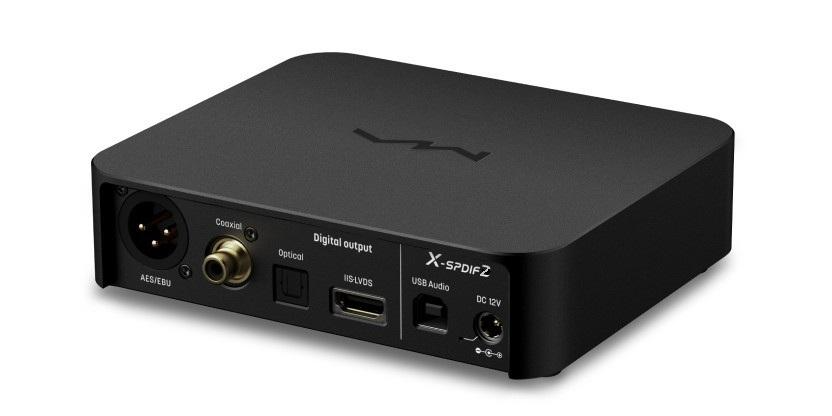
A new player joins the team.
Matrix Audio X-SPDIF 2, USB Digital Audio Interface (non-current version)
This device, like the SMSL PO100 Pro, converts a USB stream into the various SPDIF data streams and I2S (also called IIS). The Matrix is touted as isolating “impurity” from the source and sending on a “perfect and pure” digital audio signal. (Shades of how CDs were once touted as, “Perfect Sound Forever”? But let us not rush to judge.) I think the X-SPDIF 2 originally sold in the 500 to 700 USD range. I picked up a used one for $300 CDN. The X-SPDIF 2 has been superseded by the X-SPDIF 3. I believe the major difference is the -3 has galvanic isolation on the I2S output. So maybe the -2 wasn’t quite perfect and pure? Let’s chalk the -3 version up to progress. Note: The above picture is not exactly as my X-SPDIF 2 appears.
2a/ USB Regen, Matrix Audio X-SPDIF 2, Audioquest cables
Node N130 + AQ USB cable + USB Regen + AQ USB cable + X-SPDIF 2 + AQ HDMI cable into Directstream DAC’s I2S input.
Sonics: This combination was surprisingly good! In general, it lacked a little bit of everything compared to, “The Reference” but came surprisingly close. “The Reference” has more draw-you-in intimacy, expressiveness, and non-mechanical texture and flow. Honestly, I didn’t think I could get this close to, “The Reference”. With a bit of patience, canny shopping and about $1,200, plus the cost a DAC, this combination might not be far off our magic $3K number.
Score: 85
2b/ Matrix Audio X-SPDIF 2, Audioquest cables, (no USB Regen)
Node N130 + AQ USB cable + X-SPDIF 2 + AQ HDMI cable into Directstream DAC’s I2S input.
Sonics: I used the Regen’s low noise supply to power the X-SPDIF 2. It might be considered cheating, but we are seeking the best sound possible. Very low noise, wall wart-style power supplies, specifically for audio gear, are available. As well, using an external supply for the X-SPDIF 2 lessens any potential stress on the Node’s power supply. Compared to 2a, the 3D soundscape was slightly flattened with less distinct instrumental and vocal placement. Bass was less well controlled, becoming, by comparison, a bit indistinct and flabby.
Score: 75
2c/ USB Regen, Matrix Audio X-SPDIF 2, AES/EBU DAC Connection (Audioquest and Kimber cables)
Node N130 + AQ USB cable + USB Regen + AQ USB cable + X-SPDIF 2 + Cardas Clear AES/EBU interconnect into Directstream DAC’s AES/EBU input.
Sonics: I wanted to hear if there was a difference with the X-SPDIF 2 in the data stream connected to the DAC (via the X-SPDIF 2’s AES/EBU output) with my Cardas digital interconnect. Compared to 2a, this combination is ever so slightly better. The soundscape was portrayed more precisely. Overall, the sound was a small degree more tactile. However, let us keep in mind that it took a thousand-dollar, +/- depending on the currency, cable, to best a +/- eighty-dollar cable. If one were to drop a grand on a HDMI cable for setup 2a, then might it equal this combo? Somehow, I doubt it. By separating the clocks and data streams before sending them through a HDMI cable should, in theory, make the cable less of a factor, sound-quality wise.
Score: 90
Conclusions, System 2
Node source, Matrix Audio X-SPDIF 2 + other bits, pieces and cables
-I was pleasantly surprised by how much sonic improvement the Matrix Audio X-SPDIF 2 brought to the party. The X-SPDIF 2 out-performed other, more expensive, DDC devices I’ve tried recently. More on those other DDCs in part 2 of this report.
-The X-SPDIF 2 topped the SMSL PO100, as expected for a more expensive device.
-The delta of $200 ($100 for the PO100 vs $300 for the used X-SPDIF 2) would seem money well spent, considering the performance increase heard with the X-SPDIF 2.
-A used X-SPDIF 2 might be worth tracking down if a USB device is the source of digits, even if the DAC it’s connected to doesn’t have an I2S input.
-The new(er) X-SPDIF 3 would likely be a $3K budget buster, if purchased new. It would, I think, be worthwhile keeping an eye out for a used -3 as well as a -2.
-I had planned to resell the X-SPDIF 2 after completing this report, but I may hold onto it for a while. It worked well with my gear and at the $300 CDN paid, a bargain.
-Paul McGowan of PS Audio has, in the past, recommended Matrix Audio DDC devices. Make of that what you will.
I didn’t try as many permutations with the Matrix X-SPDIF 2 as was done with the SMSL PO100. Even though I have more than one hundred articles published on WOS, there is a life beyond audio waiting for me.
Next time
As the initial report was fast approaching 5,000 words, I decided to split it into two sections. I’ll disclose my impressions of a popular R2R DAC and just for fun, throw in an inexpensive DAC too.
A quick follow-up. A long-time friend and fellow audiophile dropped by recently. The digital heart of his system is also a PS Audio DirectStream MK1 DAC, though that is the only common point between our two systems. He agreed with me that, “The Reference”, had slightly more precise instrumental and vocal placement horizontally across the soundstage as compared to the full System 2a (Node N130 + AQ USB cable + USB Regen + AQ USB cable + X-SPDIF 2 + AQ HDMI cable into the DirectStream DAC’s I2S input). However, he observed that System 2a had better soundstage vertical differentiation, than “The Reference”. He also found the overall sonic character of System 2a more to his liking than, “The Reference”.
Oh well, you gain some friends, you lose friends. Only kidding. It just goes to show that we are all different. I can only point fellow audiophiles in what I think is the correct direction on the highway to better sound. The off-ramp they choose is a very personal decision.
Happy listening,
Steve Graham
Steve,
I found this article to be very interesting in no small part because I have most of these same pieces. When will Part 2 be published.?