
Seeking Discount Digital: $13K Performance for $3K?
Part 2
If you haven’t read part 1 yet, please do so. This part will make more sense.
An Alternate Step on the DAC Ladder (get it?)
Gustard R26 DAC, Mini Review
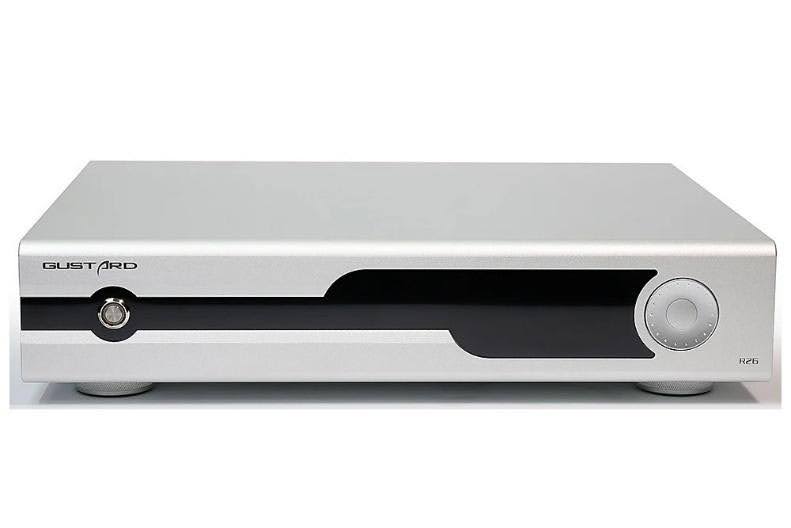
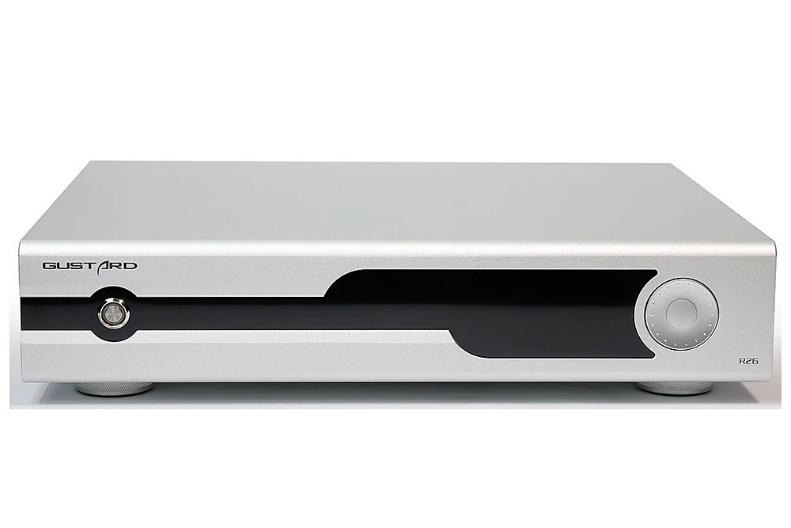
The Gustard R26, resistor ladder DAC, also known as a R2R DAC, was released approximately two years ago. The Gustard is also a streamer, but not an all-in-one, the way Bluesound (or similar) work. For streaming duty, the R26 is intended to be used with third-party devices and software, as for instance, becoming a JRiver or Roon endpoint. It can also be employed strictly as a DAC, which is the way I used it. The R26, along with various other R2R models from Denafrips, LaiV and the like, have developed a dedicated following in the past few years, primarily for sonic qualities that differ from chip-based DAC architectures.
My first go-round with R2R DACs left me unimpressed, but that was a very inexpensive implementation. https://wallofsound.ca/audioreviews/digital/review-fiio-k11-r2r-dac-headphone-amp/
A kind audiophile loaned me his backup R26, so that I might include it in this adventure. The R26 sells new for about $2,300 CDN, ~$1,700 US. I’ve seen them offered used for about $1,300 CDN, likely less in the USA. The R26 deviates from our initial $13K starting point, but the chance to try it, in the context of the discount digital theme, was too good to pass up.
Gustard R26 versus the PS Audio Directstream (NAD 50.2 source)
NAD Masters 50.2 + Cardas Clear AES/EBU interconnect into Gustard R26
I swapped out my PS Directstream DAC with the Gustard, using the R26’s AES/EBU input to get a sense of its audio “flavour” in my system.
Sonics: Note that the R26 has several setup options. This isn’t a review of the R26 per se, so I did a quick poll of the online reviews to determine the general consensus on preferred settings. I set the PCM Filter to MID, PCM NOS to OFF (upsampling turned on) and ATTENUATION to OFF.
The most obvious difference between the PS Directstream DAC and the Gustard R26 was in the bass. Depending on your point of view, the PS is well defined but slightly lean or the R26 tends toward the woolly and fulsome. Through the mids and treble, there wasn’t much difference between the two DACs, frequency-response wise. The PS was slightly more resolving and had a bit more grace under pressure, when the music got loud and complex. The PS DAC presented a slightly more layered sound stage and marginally more specific imaging. Part and parcel of the PS DAC’s higher resolution, was its somewhat better treatment of micro dynamics. But the differences, other than the bass, were quite small and could only be perceived with back-to-back auditioning. I prefer my PS DAC, but can understand some audiophiles giving the R26 the nod.
Score: I scored the R26 at 100. This is not to say I think it performs identically to my PS DAC. The point of this exercise is to rate the R26’s and the Directstream’s performance, with various less expensive up-stream digital sources, relative to their individual starting points with my NAD 50.2 source.
System 3: Node N130 source, Gustard DAC
Please note: An equivalent rating number of this DAC, versus the PS DAC in part one, is not to imply identical performance. A score of say, 90 with the PS DAC, does not mean it sounds the same as the Gustard scoring 90. The score indicates the level of performance from the somewhat arbitrary starting point of 100, for each individual DAC.
3a/ USB Regen, Matrix Audio X-SPDIF 2 with Audioquest cables
Node N130 + AQ USB cable + USB Regen + AQ USB cable + X-SPDIF 2 + AQ HDMI cable into DAC’s I2S input.
Sonics: In comparison to the “Mini Review” above, where the Gustard was paired my NAD 50.2, the performance degradation with this particular grouping of source and ancillary components was minor. The soundstage was compressed slightly, front to back. Instruments and voices didn’t float quite so freely from the speakers. The sound was very slightly less engaging. Frequent A-B switching between the Node-based concoction of bits and pieces, and the NAD 50.2 was required to perceive sonic differences. All-in-all, surprisingly listenable.
Score: 90
3b/ Matrix Audio X-SPDIF 2, Audioquest cables (no USB Regen)
Node N130 + AQ USB cable + X-SPDIF 2 + AQ HDMI cable into DAC’s I2S input.
Sonics: I used the Regen’s low noise supply to power the X-SPDI 2. It might be considered cheating, a bit, but we are seeking the best sound possible. Very-low noise, wall wart-style, power supplies specifically for audio gear are available. As well, using an external supply for the X-SPDIF 2 removed powering duties from the Node.
Either the Node has a less-than-great, USB data stream or the Matrix X-SPDIF 2 doesn’t clean up USB data as well as it touts. It could be a bit of both.
The soundstage was somewhat flattened compared to 3a. Position of instruments and voices in the stage were less specific as well. The sound wasn’t bad, just a bit of a downgrade, compared to what was possible when the USB Regen was in the signal chain.
Score: 75
3c/ Node direct to DAC’s USB input (no USB Regen, no Matrix X-SPDIF 2)
Node N130 + AQ USB cable into DAC’s USB input.
Sonics: The sound wasn’t exactly horrible, but definitely a significant step down from 3b. Not only was the soundstage flatter still and less specific than 3b, but bass was less distinct and female voices could, at times, be shrill with a nasty edge.
Score: 55
Conclusions, System 3
Node source, Gustard R26 DAC, Matrix X-SPDIF 2 + other bits, pieces and cable
-Much like the PS DAC, the Gustard R26 showed significant improvement when both the USB Regen and the X-SPDIF 2 were employed.
-I didn’t subject the R26 to as many connection scenarios performed with the PS DAC. The variations in sound quality fell in line with those heard with the PS DAC.
-The straight-in, USB connection under-performed.
How about a cheap DAC Steve?
OK
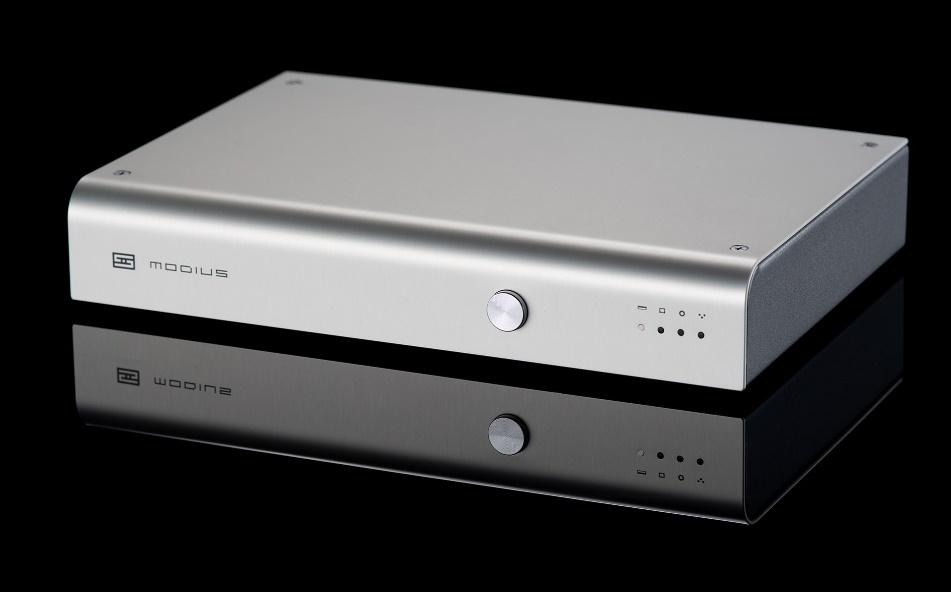
Schiit Modius E DAC (recently discontinued)
I conveyed my first impressions of the Modius E in the FiiO R2R DAC review, link above. At that time, I only used the Modius E’s coaxial input. This time around, I used the AES/EBU and USB inputs. It should be noted that the Modius incorporates Schiit’s proprietary Unison USB receiver, said to be superior to standard XMOS receiver chips.
I omitted numerical scores ratings with the Schiit DAC. Raw numbers might cause confusion between the Modius E and the higher-performing PS Audio and Gustard DACs. After a quick ear recalibration with the NAD50.2, Cardas interconnect and PS Directstream DAC, I was ready for the final round.
4a/ NAD 50.2, Cardas AES/EBU interconnect, Modius E
Obviously, an overkill source and digital interconnect. But it sets a baseline of what the Modius E is capable. The following observations are applicable, regardless of subsequent source component variations. Compared to the PS DAC, bass was less defined and less deep. The soundstage was flattened somewhat, front to back. Instruments and voices didn’t float quite so freely from the speakers as they did with the PS DAC. The Modius E can sound somewhat strained during loud, complex musical passages. The PS DAC had a more relaxed, more informative, more dynamic and more dimensional presentation of musical events. Still, the Modius E performs very well given its 229 USD price, when new.
4b/ Node, USB Regen, Matrix Audio X-SPDIF 2, AES/EBU connection
Node N130 + AQ USB cable + USB Regen + AQ USB cable + X-SPDIF 2 + Cardas interconnect into DAC’s AES/EBU input
Source overkill, like 4a. Sonically, very close to 4a. I had a hard time distinguishing 4a from 4b. Like 4a, the DAC would appear to be the limiting factor, not the source.
4c/ Node, USB Regen, Matrix Audio X-SPDIF 2, Coax connection
Node N130 + AQ USB cable + USB Regen + AQ USB cable + X-SPDIF 2 + AQ Cinnamon Coax into DAC’s coaxial input
Sound quality took a noticeable hit with this combination of source components and interconnects. I don’t know if it’s the coax interconnect, Matrix, DAC, or a system-matching issue. The sound was distant and lacking in dynamics. Overall, bland and unexciting. Don’t despair, some good news next.
4d/ USB Regen with AQ cables
Node N130 + AQ USB cable + USB Regen + AQ USB cable into DAC’s USB input
I mentioned earlier the Modius incorporates Schiit’s proprietary Unison USB receiver. The sound with only the USB Regen between the Node and Dac, was surprisingly good. It is roughly on the same level as 4a or 4b. The bass was slightly less deep and not quite as well controlled as 4a, but otherwise a very pleasant-sounding performance. It was not a hardship listening to this combination of components. A major improvement over the coax connection (4c) from the Matrix.
4e/ Node direct to Modius E
Node N130 + AQ USB cable into DAC’s USB input
A downgrade from 4d when the USB Regen was in the circuit. Bass was less deep and defined. Highs could get screechy. Louder passages could be, what I like to describe as, ear-wincing. Less listenable, over all, than 4d.
Conclusions, System 4
Node source, Modius E DAC, Matrix X-SPDIF 2 + other bits, pieces and cable
-Most certainly, I cannot declare that the Modius E representative of all, most or even some inexpensive DACs. Potentially, its Unison USB receiver is responsible for the some of the decent sound quality observed through that input.
-The Matrix Audio D2D was not all that helpful. In fact, the slight performance increase heard when using the X-SPDIF 2, was not good value for money.
-Connection to the DAC, from the X-SPDIF2, with a coax cable was, in truth, a considerable sonic downgrade.
-Even with the purported benefits of the Modius E’s Unison USB receiver, the USB Regen’s ministrations on the data stream improved sonics.
-I would state that using a USB Regen only, between the Node and the Modius E, to be the best cost/benefit proposition.
Summary
At the beginning of part one, I teased the possibility of replicating a $13K digital front-end with one costing $3K. Was this accomplished? No, but I came quite close.
Obviously, this small survey of equipment can in no way be considered truly representative of the current state of digital replay. My role, as I see it, is to inspire experimentation in the service of increased musical enjoyment, and to hopefully point digi-philes on the right road to doing so.
All the same, I shall stick my neck out with a few observations:
-I consider USB data transmission to be non-optimal for digital music.
-Time, effort and money are required to make USB data more listenable.
-Good, audio-specific, digital data cables are important.
-A DAC with an I2S input can, with the right combination of ancillaries, sound better than expected, given the budgetary compromises of typical USB sources.
-If all the stars align, a DAC with an I2S input will likely yield its best USB-sourced sound, once out-board conversion to I2S has been performed.
-Even DACs without an I2S input might yield better performance with a DDC in their USB-derived signal chain. Or they might not. It depends on the DAC. Higher performance (more expensive) DACs quite possibly. Less expensive DACs, less likely, but possible.
-I will even go so far as to say that a DAC fed raw, un-reconstructed USB data, will likely under-perform.
I welcome anyone not in agreement, or whose observations are at odds with mine, to post a comment. If you have found a combination of digital source and DAC that floats your zeros and ones boat, please tell us what it is and be sure to mention the digital interconnect used.
My take on the current state of digital audio device acquisition
Somewhat related to this report, I have had an, at times, contentious relationship with Chinese-branded hi-fi gear. Some have worked well, some have ceased to function after a year or so, and some have not functioned properly right from the start. When they work well and continue to do so, all well and good. When problems develop, service, meaning repairs and basic customer communication has been an issue for me. Even communicating an issue and having it understood has been difficult. I wasn’t certain if a response I received (actually several near-identical responses from the same manufacturer) was a communication issue or just an attempt to fob me off. We, in North America, expect a high level of service after a sale, which is not necessarily the norm in other parts of the world.
I had been, from late 2024, trying to improve the performance of my digital components. That was the genesis of this undertaking. I started with the SMSL PO100 and had been encouraged with the results, even though it didn’t match the performance of my NAD 50.2 plus PS Audio Directstream DAC. After the SMSL PO100, I progressed through two significantly more expensive DDCs. Neither, from two different manufacturers, resulted in a performance improvement. I won’t mention the manufacturers as there might have been a system matching issue with one. The second was, I think, a firmware issue. Both devices had multiple inputs which enabled AES/EBU connection of the NAD 50.2 via my Cardas cable, then output on HDMI to my PS DAC’s I2S input. In both cases, the performance with the DDCs in the chain was poorer. In the case of my reference, NAD 50.2 plus PS DAC, it seems that less “improvement” is better than more “improvement”. You readers are the beneficiaries of my digital follies.
The DDCs that I think had a firmware issue, lead me to believe there might have been some developmental short cuts due to all possible connection scenarios not being considered. My thirty-five-year career building military, medical and aeronautical systems has left me indelibly convinced of the importance of testing for all possible end-use scenarios. Not that I think Hi-Fi gear necessarily requires that sort of rigor, but still, no corners should be cut.
My personal take is that I would roll the dice on a new item costing a hundred bucks or so. But over two to three hundred? I’d have to think hard before bashing my credit card for the current DAC of the week, DDC, or some similar latest and greatest. Buying used gear is another matter. Someone else has hopefully dealt with the teething problems, taken the depreciation hit and a bargain might be had.
One large e-commerce site, you know who I’m referring to, has sellers that might use a name like: Something-ca. You might expect Something-ca, to be in Canada, but they are not. Some Asian brands have service facilities in the USA, but crossing borders, in person and I suspect for packages too, has become fraught of late. I’m not saying Chinese-branded Hi-Fi is bad. My opinion, based on what I have experienced, is that it is not fully mature and has yet to achieve the level of reliability, service, and customer service we have come to expect from North American, British, European and Japanese brands.